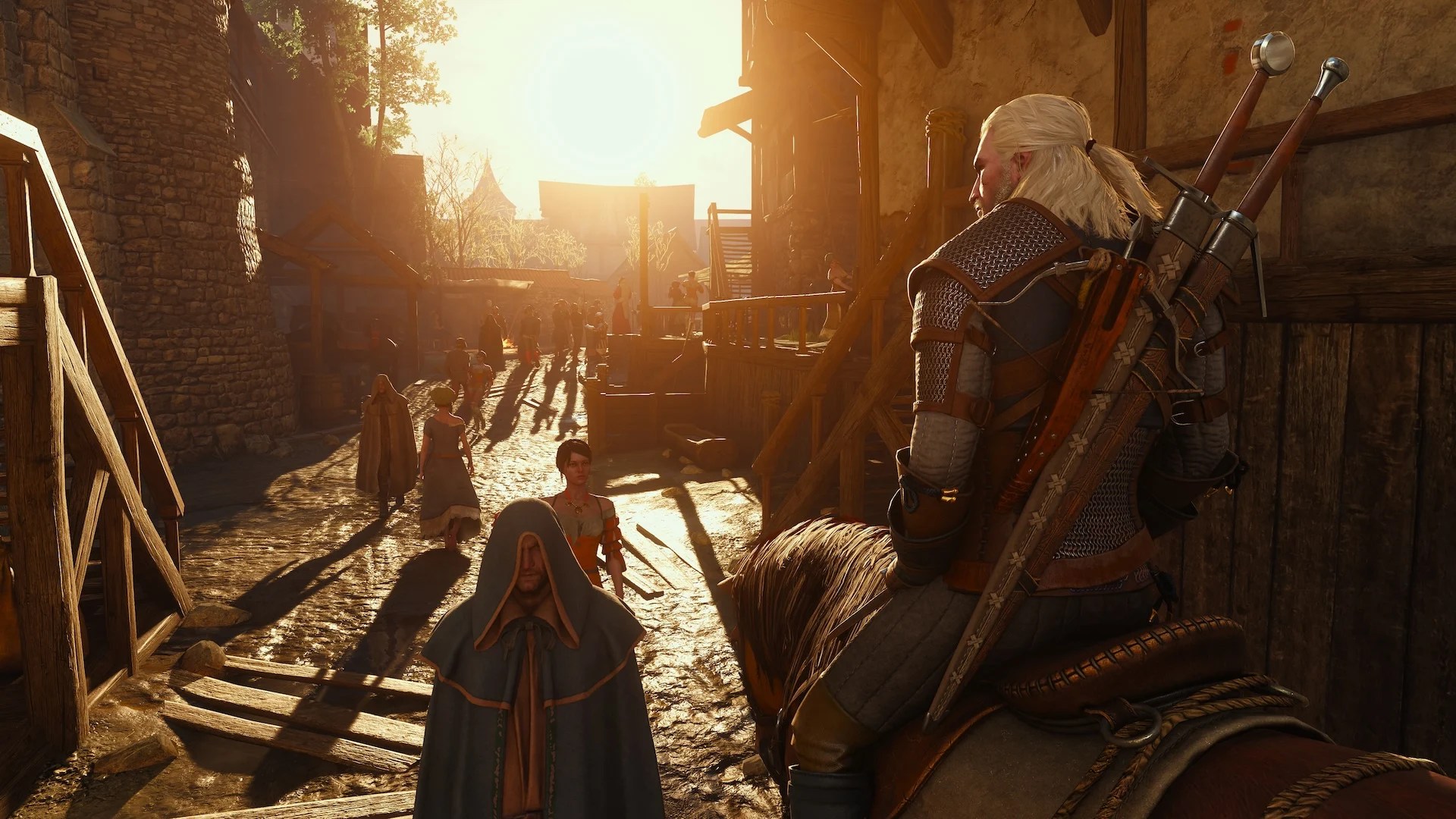
When Digital Foundry drops a deep-dive technical analysis on a massive port, the gaming world usually expects a predictable routine of pixel counting and frame pacing graphs. But personally, I think what we are seeing with The Witcher 3 Remastered landing on Nintendo's upcoming hardware generation is something far more profound. It represents a fascinating collision between raw architectural ambition and the stubborn realities of portable hardware. What many people don't realize is that bringing a modern open-world masterpiece to a handheld device isn't just a technical exercise; it is a masterclass in psychological expectation management.
The Illusion of Scale in the Palm of Your Hand
If you take a step back and think about it, the file size jump alone—ballooning from roughly thirty-nine gigabytes on the original Switch to over fifty-five gigabytes on the new hardware—tells a story of vastly elevated ambitions. A detail that I find especially interesting is how developers are choosing to spend that extra storage budget. Instead of brute-forcing native pixel counts, we are seeing higher-quality asset streams, vastly improved texture resolutions, and cleaner pre-rendered cutscenes.
In my opinion, this shift underscores a mature understanding of modern rendering pipelines. Gamers often get obsessed with raw resolution numbers, but what actually tricks our brains into accepting a handheld world as 'next-gen' is lighting cohesion and asset density. When local lights finally cast dynamic shadows across the environment and ambient occlusion becomes more precise, the entire virtual ecosystem feels cohesive. It is less about seeing every single blade of grass in crystalline 4K and more about whether the world feels alive and breathing while you are sitting on a commuter train.
Navigating the Compromises of Frame Rate and Resolution
One thing that immediately stands out in the technical breakdown is the clever use of upscaling wizardry, specifically DLSS aiming for 1080p docked and 720p handheld targets from lower base rendering resolutions. What this really suggests is that hardware manufacturers and developers have finally accepted reconstruction tech as a fundamental pillar of portable gaming rather than a cheap shortcut. Without it, pushing reworked physically based textures, advanced foliage shading, and a reworked color grading suite would be entirely out of the question on a mobile chipset.
However, this brings us to the eternal tug-of-war between fluidity and fidelity, particularly regarding the experimental forty frames-per-second cap tied to one-hundred-and-twenty-hertz displays. From my perspective, while the forty FPS mode is a delightful luxury for open wilderness exploration, the reality that it struggles in dense urban centers highlights the limits of what we can demand from mobile silicon. Personally, I suspect most seasoned players will quickly retreat to a locked thirty frames per second for stability. There is an understated peace of mind in a rock-solid frame cap that prevents frame-pacing stutters during critical combat encounters, proving that sometimes consistency trumps technological ambition.
The Bigger Picture for Portable RPGs
This entire release forces us to rethink what a portable platform can comfortably support. What makes this particularly fascinating is the upstream gesture of offering upgrade paths for existing physical owners, bridging generational gaps in a way that feels surprisingly consumer-friendly. This raises a deeper question about how far backward-and-forward compatibility can stretch before older software completely breaks under the weight of modern expectations.
Ultimately, The Witcher 3 running on next-generation Nintendo hardware isn't just about Geralt of Rivia looking marginally better on a bus ride. It is a signpost for the future of hybrid gaming, proving that developers are getting terrifyingly good at compressing massive, sprawling epics into pocket-sized packages without losing their soul. If this is what a transitional port looks like, the next few years of portable open-world experiences are going to completely redefine how we consume massive virtual stories on the move.